

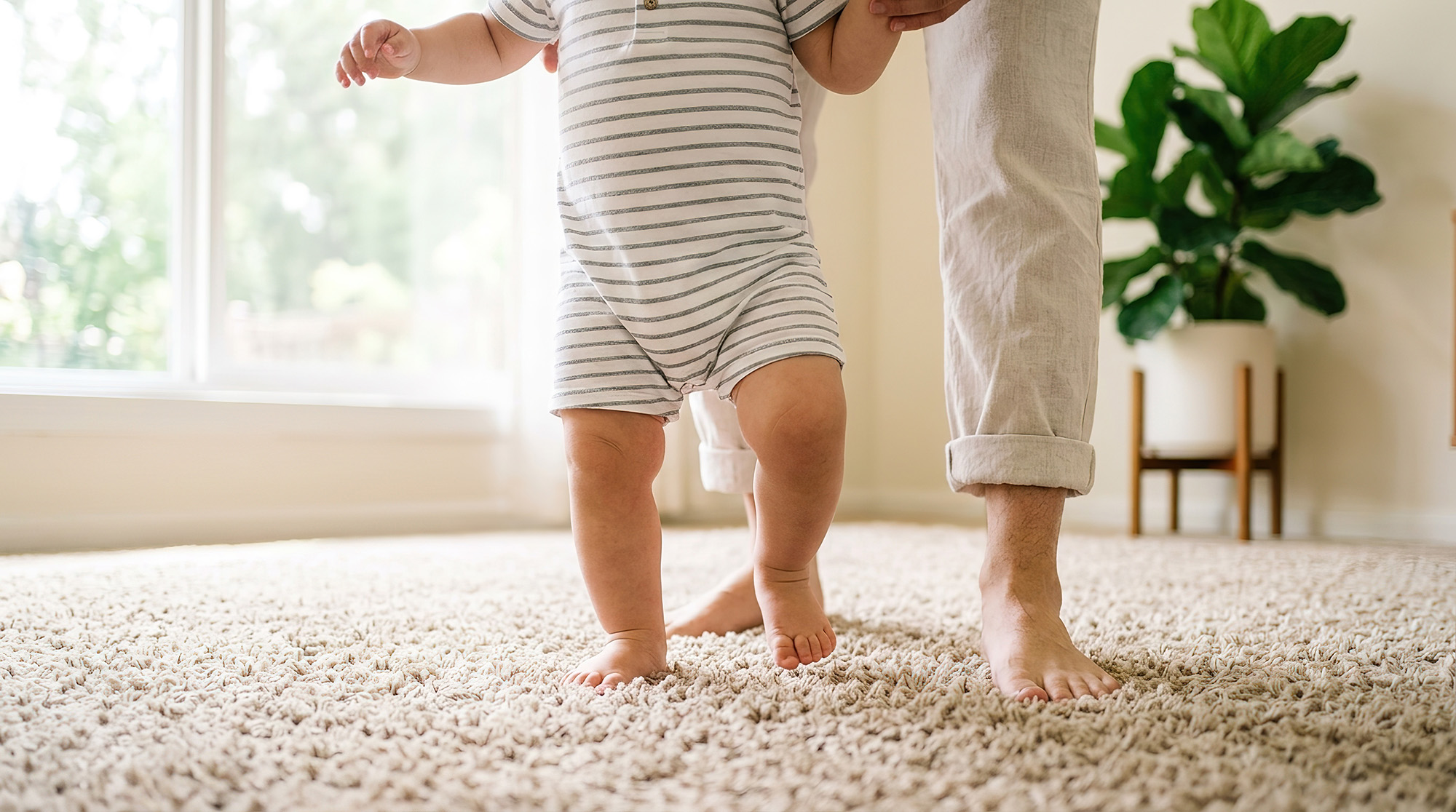
This Stage Has Different Needs Than General Kid Friendly Carpet
Most carpet advice aimed at families focuses on stain resistance and durability against general wear, which matters, but it is not the same question as what a carpet needs to do for a child who is actively learning to balance and take steps. At this specific stage, cushioning quality, surface grip, and fall impact absorption matter more than they do once a child is walking confidently and the household shifts focus to stain and mess management instead.
Mars PA parents going through this stage right now are usually shopping for carpet with the wrong checklist in mind, simply because most carpet buying content is written for the stain resistant, pet friendly, general durability audience rather than this narrower and more specific moment.
Cushioning and Fall Impact Absorption
A thicker, higher density pad underneath the carpet does more to protect a toddler during a fall than the carpet fiber itself, since the padding is what actually absorbs impact before it reaches the subfloor. This is worth prioritizing specifically during this stage, even if it means choosing a slightly different pad than what might be recommended for a general living room replacement elsewhere in the home.
A carpet with a plush, higher pile also adds a bit of surface cushioning on top of the pad, though the padding underneath does the majority of the actual impact absorption work. For parents specifically shopping with this stage in mind, asking directly about pad density and thickness rather than just carpet style is the more useful conversation to have with a flooring specialist.
Grip and Traction for Unsteady Steps
A looped or tightly constructed low pile carpet can actually provide better traction for a child learning to balance than an extremely plush, high pile style, since a very deep pile can shift slightly underfoot in a way that adds instability rather than removing it. This runs counter to the instinct many parents have toward choosing the softest, plushest option available specifically for a toddler's room.
A moderate pile height with a denser, tighter construction tends to give a more stable, predictable surface for a child pushing up from a crawl into standing and taking early steps. This is a detail worth discussing directly, since it is not the first thing most carpet showrooms lead with when a parent mentions shopping for a young child's room.
Fiber Choice for Frequent Contact and Sensitive Skin
Toddlers at this stage spend a lot of time with bare skin directly against the carpet, crawling, sitting, and eventually standing and falling repeatedly onto the same surface throughout the day. Nylon and triexta fibers tend to feel softer against skin than some polyester or olefin blends, and they also resist static buildup better, which matters for a child who is on the floor for hours at a time rather than walking across it briefly.
Wool is another option worth considering for this specific stage, since it offers a naturally soft feel and tends to stay cooler and more comfortable for extended floor time than some synthetic alternatives, though it comes at a higher price point that is worth weighing against the relatively short window this specific developmental stage actually lasts.
Stain Resistance Still Matters, Just Not as the Only Priority
Toddlers at the walking stage are also frequently eating, drinking, and generally making a mess on the same carpet they are learning to walk on, so stain resistant treatment still belongs on the list even though it is not the primary concern this particular guide is focused on. A stain resistant treatment paired with the right pile height and padding gives a more complete answer than optimizing for one factor alone.
This is really a layered decision rather than a single spec to prioritize above all others, and the right combination depends on how the room is actually used day to day beyond just this one developmental window.
A Practical Note on Longevity Through This Stage
This specific stage of learning to walk lasts a matter of months, not years, which is worth keeping in perspective when deciding how much to prioritize it over the carpet's longer term performance in the room. A carpet and pad combination chosen with this stage in mind should still hold up well for the years of walking, running, and general use that follow it, rather than being treated as a temporary, disposable choice.
Asking a flooring specialist directly about both the immediate cushioning and grip needs and the carpet's expected performance over the following several years gives a more complete picture than focusing on just one or the other.
Paracca Interiors helps Mars PA parents choose carpet and padding combinations suited to exactly this stage of early walking, along with how the room will be used in the years that follow. Visit us at Valencia & Pittsburgh, PA to feel pile height and padding options in person, serving Pittsburgh, Gibsonia, Mars, Butler, Wexford, Allison Park, and Cranberry Township, PA along with other areas.
Shopping for carpet with a toddler learning to walk in mind? Browse our Carpet Collection or contact us to schedule a free in home consultation.


