

This Decision Is About Sightlines, Not Just Preference
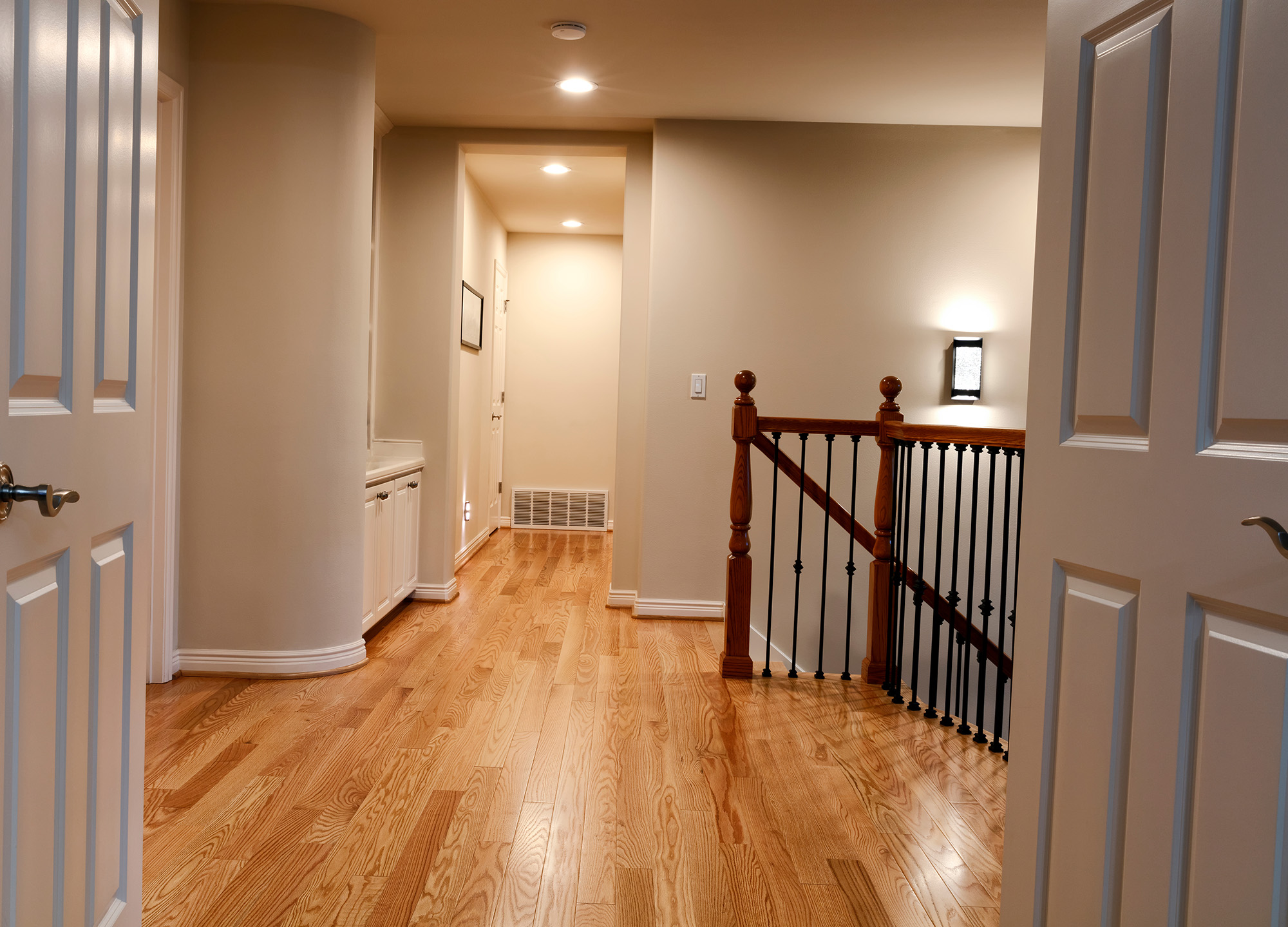
The instinct to run the same hardwood everywhere usually comes from wanting a home to feel cohesive, and that instinct is not wrong. But the real question is not whether one species looks good throughout, it is which rooms are actually visible from which other rooms at the same time.
In a lot of newer Cranberry Township floor plans, the kitchen, dining area, and living room are one continuous sightline with no walls or doorways breaking them up. That is exactly the layout where switching species or even switching tone mid room reads as a mistake rather than a design choice, because the eye catches the seam immediately. A closed off den or a bedroom down a separate hallway is a completely different situation, since nobody sees that room and the main living space in the same glance.
Where a Change Actually Makes Sense
A room that closes off with a door, sits on a different level, or serves a clearly different purpose than the rest of the home is a legitimate candidate for a different hardwood choice, and this is worth saying plainly because a lot of homeowners assume any change signals a lack of planning. A home office that gets afternoon sun all day, a primary bedroom suite set apart from the main floor, or a lower level family room are all reasonable places to introduce a different tone or even a different species without the home feeling disjointed.
The test that actually works here is standing in the doorway of the room in question and looking back toward the space it connects to. If both floors are visible in that single glance, matching or staying in the same tonal family matters. If the doorway itself creates a natural stopping point, the room can carry its own identity.
The Cost Argument Goes Both Ways
It is worth being direct about something most flooring content skips over. Buying one species and finish in volume for an entire home does not automatically cost less per square foot than mixing two products, since it depends heavily on which species and which finish are involved. A single high end species run through 2,400 square feet is not automatically cheaper than a more modest species in the main living areas paired with a slightly higher end choice in just a primary suite.
This is genuinely worth working through with a flooring specialist rather than assuming either approach is the budget conscious one, because the honest answer depends on the specific products being compared, not on the general strategy of matching versus mixing.
What Continuous Hardwood Solves That Room Changes Cannot
There is one practical advantage to running hardwood continuously that has nothing to do with aesthetics. A single species and finish throughout means future refinishing, spot repairs, and replacement boards down the line are simpler, because there is only one product to source and match. A home with three or four different species across different rooms means keeping track of what went where, and sourcing a matching replacement board fifteen years later can be genuinely difficult if that specific product has been discontinued.
This is a real consideration for anyone planning to stay in a Cranberry Township home long term rather than one heading toward resale in the next few years, since long term maintenance simplicity has real value that does not show up in a showroom decision.
What Room by Room Choices Solve That Continuous Hardwood Cannot
On the other side, choosing species and tone room by room lets each space actually respond to its own light, use, and traffic pattern rather than forcing one product to perform well everywhere. A north facing home office and a south facing living room genuinely look different under the same exact stain, and a species chosen with that in mind will read better in both rooms than a single species compromise chosen to split the difference.
This also gives homeowners more flexibility to update one room's look over time without needing to touch the rest of the house, which matters for anyone who likes to refresh a space every several years without a full home commitment each time.
A Simple Way to Approach the Decision
Walking the home's actual floor plan with sightlines in mind, rather than deciding in the abstract, gives a much clearer answer than most people expect. Rooms that share continuous visual space benefit from consistency, while rooms that close off on their own can be considered independently based on their specific light and function.
Paracca Interiors helps homeowners throughout Pittsburgh, Gibsonia, Mars, Butler, Wexford, Allison Park, and Cranberry Township, PA along with other areas walk through exactly this kind of floor plan specific decision before ordering anything, using real samples in the actual rooms being considered. Visit us at Valencia & Pittsburgh, PA to see how different species and tones perform across connected and separate spaces.
Working through a whole home flooring plan for your Cranberry Township home? Browse our Hardwood Flooring Collection or contact us to schedule a free in home consultation.


